Welcome to Details

I created this page to answer questions about kevinX terminology and technology. -Kevin
It starts with the written Content, Knowledge Base, and AI Data Stack Layer, then covers the two product series (CORE and X), FAQs, technical notes, QA process, how kevinX uses RAG chunking (or not.

In addition. data-tagging and metadata, plus AI stack and workflow diagrams.
A few basics before you begin: kevinX is self hosted, so there are no API costs, you control your own security, and no PII is shared. It’s also platform agnostic, so it works with virtually any AI chatbot, agent or system, CMS, or LMS.

Infographic

ACTION CONTENT

Microlessons, ebooks, and playbooks addressing SMB topics.

KNOWLEDGE BASE

Collection of customer, leadership, marketing, and sales content.

AI DATA STACK LAYER

Both RAG chunked and unchunked, metadata-enriched.

✦ AI DATA STACK LAYER CORE series

This series includes source-level segmentation across 500+ microlessons, 25+eBooks, and playbooks. It creates a single AI stack data layer that is RAG-ready with full metadata.
 JSONL format optimized for RAG, featuring chunked-text architecture, embedded metadata, stable IDs, one record per line, and an embed-ready full-text field. Each record also includes a paragraphs array, where each entry may contain one or more paragraphs grouped into a single chunk for analysis. Full metadata included: title, description, tips, categories, and keywords. Perfect for nuanced results.
OMNIBUS is for builders creating a generative AI application and want a content collection with RAG-based, chunked-text architecture & embedded metadata. Ships with full content plus five metadata fields: title, description, tips, categories, and keywords. Chunks and metadata are at the source level. Excellent for returning single microlessons, eBooks, playbooks.


✦ AI DATA STACK LAYER X
series

This series streamlines the kevinX  knowledge base into a conversational AI format. Without its own RAG layer. It is designed for automated ingestion in a client’s RAG pipeline.
XA is purpose-built for chatbots or agents that need concise SMB expertise. It draws from the complete kevinX knowledge base. Perfect for nuanced responses.
XM is perfect for ask me anything chatbots or agents for quick access concise, action-oriented small core business knowledge.  It draws exclusively from the kevinX microlesson knowledge base for quick responses. 

 
✦ FAQ  
Question: What are the differences between content, knowledge base, and an AI data stack layer?
Answer:  (1.) Content consists of individual microlessons, eBooks, and playbooks. (2.) Knowledge base is a large collection of content organized into a single file. (3.) AI data stack layer Core or X Series is a RAG-chunked or unchunked knowledge base file.
Question: What doesn’t the X Series include chunking?
Answer:  The X Series does not include chunking because the client’s RAG pipeline handles the chunking as part of its ingestion process. It does however include metada. 
Question: What topics are covered?
Answer:  Customer engagement, leadership, marketing, sales.  
Question: How is it delivered?
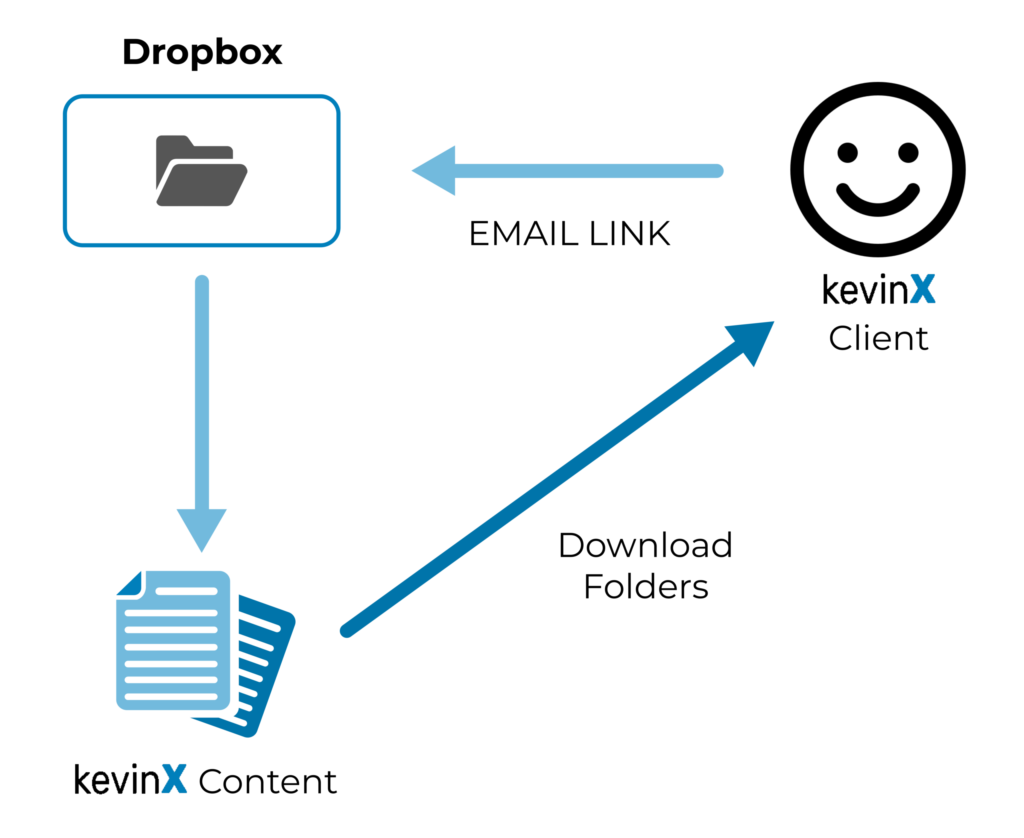
Answer: Via an email link to Dropbox. Download folder/files, READMEs, DATA DICTIONARIEs. and metadata catalog. 


✦
TECH NOTES

Every product file ships with companion resources:
DATA DICTIONARY – Describes the structure, content, and meaning of data elements for each product file. 
METADATA CATALOG – An XLSX with a description, practical tips, categories, and keywords for every microlesson, eBook, and playbook.
README – Tells you what you have and how to use it.

✦ QA PROCESS

kevinX content is not merely converted into multiple formats. Every deployment file type is systematically validated against the parent source content through automated integrity testing, ensuring accuracy.
Our proprietary validation process verifies word counts, character counts, and file parity to maintain clean, reliable content, knowledge bases, and AI stack data layers. 

A START TO YOUR DAY

Description: Practical steps for small business owners to structure their mornings for maximum productivity and focus.

Tip: Morning routines beat chaos every single time.

Here is how a small business owner might start their day in order to set themselves up for success. Reviewing their schedule and to-do list for the day, prioritizing tasks and making sure they have enough time to complete them.

Check the financials like checking bank accounts and cash flow

Check the emails, voice mails and respond to important ones

Check the inventory and reorder the items that are low

Planning out the day’s marketing and outreach efforts, such as reaching out to potential customers or working on social media posts.

Review sales numbers from the previous day and week, and analyze trends or patterns that may be emerging.

Prepare for any important meetings or calls that are scheduled for the day.

Read feedback from previous customers and look for ways to improve the business.

Reviewing the plan for the week, the month and the year.

These tips can help small business owners start their day with focus, but every business runs on its own rhythm. Schedules will vary based on the size, structure, and demands of the business.

Use of this content for ReferralSafe Clients Only © ReferralSafe LLC. All rights reserved.

BE CURIOUS

Description: Use strategic questioning throughout your sales process to understand client needs and close more deals.

Tip: Smart questions reveal client pain points faster.

Asking questions is a key part of the sales process, as it allows salespeople to gather information about their customers and tailor their sales solution accordingly.

Here are some tips for asking questions in sales.

Use open-ended questions: Open-ended questions are questions that cannot be answered with a simple yes or no. These types of questions encourage customers to elaborate and provide more information, which can help salespeople to better understand their needs and concerns.

Ask clarifying questions: If a customer says something that you don’t understand or that raises additional questions, it can be helpful to ask clarifying questions to gather more information.

Avoid asking leading questions: Leading questions are questions that suggest a specific answer. These types of questions can be perceived as manipulative and may not provide genuine insights into the customer’s needs and concerns.

Use the “5 Whys” technique: This technique involves asking a series of “why” questions to dig deeper and understand the root cause of a problem or need.

Follow up: If a customer raises an issue or concern, it can be helpful to follow up with additional questions to better understand their perspective and needs.

By using these techniques, salespeople can ask effective questions that help them to gather valuable information and tailor their sales pitch to the specific needs of their customers.

Use of this content for ReferralSafe Clients Only © ReferralSafe LLC. All rights reserved.

EXPAND MY BUSINESS

Description: Strategic approaches to growing and expanding your small business.

Tip: Growth without systems creates chaos, not sustainable success.

Expanding a business can be a great way to increase profits, reach new markets, and grow your company. However, it’s important to carefully consider the potential risks and rewards of expansion before making any decisions.

Here are some things to think about when deciding whether to expand your business:

Financial resources: Expanding a business often requires significant financial resources, including investments in marketing, new equipment, additional staff, and other expenses. Make sure you have the financial resources to support expansion before moving forward.

Market demand: Before expanding, research the demand for your products or services in the new market you are considering. If there is not enough demand, it may not be a good idea to invest in expansion.

Competition: Consider the level of competition in the new market and whether you will be able to differentiate your business from your competitors.

Management capacity: Make sure you have the management capacity to handle the additional workload that comes with expansion.

Legal and regulatory considerations: Research the legal and regulatory requirements for doing business in the new market you are considering.

Ultimately, the decision to expand your business should be based on a thorough analysis of the potential risks and rewards, and a clear understanding of your company’s capabilities and resources. It may be helpful to seek the advice of a business consultant or lawyer before making any final decisions.

Use of this content for ReferralSafe Clients Only © ReferralSafe LLC. All rights reserved.

What happens when a small business customer asks the chatbot a question?

  1. The app takes the master microlessons JSON file (the 504 lessons) and splits it into 2,149 chunks.
  2. This happens once and is saved, and it only re-runs if the microlessons change.
  3. Then it converts each chunk into a vector or an embedding using OpenAI’s text-embedding-3-small mode.
  4. These vectors are stored as one matrix that loads into memory when the app starts.
  5. When someone asks the Chatbot a question, the question is converted by the app into a vector the same way.
  6. Then it is compared against all 2,149 chunk vectors. This takes a few milliseconds.
  7. The closest matches are grouped by microlesson.
  8. Then the best chunks from the top 2 to 3 lessons are sent to the AI LLM to write the answer.
  9. The AI LLM also receives the Question + The persona instructions.
  10. The app receives the answer from the AI LLM and finalizes it before sending it to the chatbot.

Bank, Insurer, Tech Platform serving small businesses?

kevinX.ai SMB action content (microlessons, ebooks, playbooks) cut through the noise so small business owners can quickly learn and apply new skills.

Financial Advisor?
Referrals Just Got Easier

ReferralSafe converts Net Promoter Score data into quick action content. Each account has a personalized score, next step, and skills popup.